
Cases where dental implants are not recommended
Dental implants are considered the gold standard for replacing missing teeth. However, not everyone is an ideal candidate for dental implant treatment.
Understanding who should avoid or postpone dental implants helps ensure safety and long-term success. Below are the most common situations where dental implant placement may not be recommended.
Are you a candidate for implants?
Who should not get dental implants?
Yes, there are specific cases where dental implants are not advised at the time of treatment. Because implant placement requires surgery within the jawbone, the body must be able to heal properly and integrate the implant successfully. Patients who do not meet these conditions may face a higher risk of implant failure or complications.
For this reason, dentists carefully evaluate medical history, oral health, and bone condition before recommending implant treatment. In some cases, postponing implants is safer than proceeding immediately. Proper assessment helps protect both short-term recovery and long-term outcomes.
Why are dental implants not suitable for everyone?
Dental implants are not suitable for every patient because successful treatment depends on several biological and lifestyle factors. Certain health conditions and habits can interfere with healing and osseointegration, which is the process where the implant fuses with the jawbone. Without proper integration, implant stability cannot be guaranteed.
Limitations usually relate to:
- Uncontrolled systemic health conditions
- Insufficient jawbone density
- Active oral infections
- Lifestyle habits affecting healing
A comprehensive dental and medical assessment is essential to minimize risks and ensure predictable implant success.
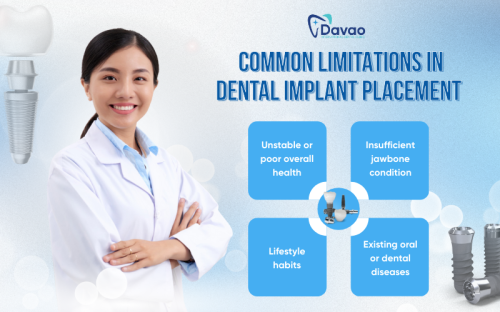
Four common health and lifestyle limitations in dental implant placement
6 cases where dental implants should be avoided or postponed
1. Patients under 18 years old
In younger patients, jawbone growth and facial development are not yet complete. Placing dental implants too early may interfere with natural bone growth and tooth alignment. For this reason, implants are generally postponed until jaw development is fully stabilized.
2. Patients with uncontrolled medical conditions
Certain systemic conditions, such as severe heart disease, uncontrolled diabetes, or bleeding disorders, can increase surgical risks. These conditions may slow healing and raise the likelihood of infection or implant failure. Dental implants should only be considered once the medical condition is properly managed.
3. Severe bone loss
Adequate bone volume and density are essential for implant stability. Patients with severe bone loss may not have enough bone to support an implant securely. In these cases, additional procedures such as bone grafting may be required before implant placement.
4. Active gum disease or oral infection
Untreated periodontal disease or active oral infections can compromise the success of dental implants. Bacteria from infected tissues may interfere with healing and implant integration. Treating gum disease first is crucial before proceeding with implant treatment.
5. Heavy smokers
Smoking significantly affects blood circulation and the body’s ability to heal. This increases the risk of implant failure and post-surgical complications. Patients who smoke heavily are often advised to quit or reduce smoking before and after implant placement.
6. Poor oral hygiene or non-compliance
Dental implants require long-term care and regular follow-up visits. Patients who neglect oral hygiene or fail to follow post-treatment instructions face a higher risk of infection and implant failure. Commitment to proper care is essential for implant longevity.
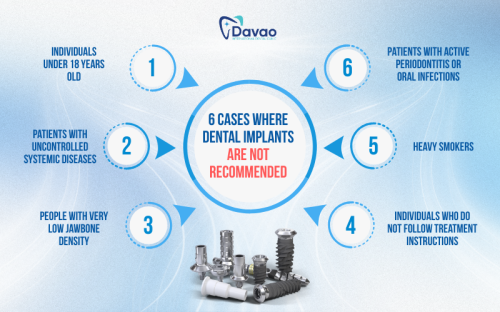
Six specific cases where dental implants are generally not recommended
When can dental implants still be an option?
Many patients who are not immediate candidates for dental implants may still become eligible after appropriate preparation. Treating underlying conditions and improving oral health can significantly increase the chances of success. In many cases, implants are postponed rather than completely ruled out.
Many patients who are not immediate candidates may still receive implants after:
- Stabilizing systemic health conditions
- Treating periodontal disease
- Bone grafting or sinus lift procedures
- Lifestyle modifications (such as quitting smoking)
A personalized treatment plan is key to safe and successful implant placement.
Final thoughts
Dental implants are not suitable for everyone at every stage of life or health condition. Accurate diagnosis and proper patient selection play a critical role in ensuring long-term implant success and safety. Consulting an experienced implant dentist helps determine the most appropriate approach and achieve the best possible outcome.